
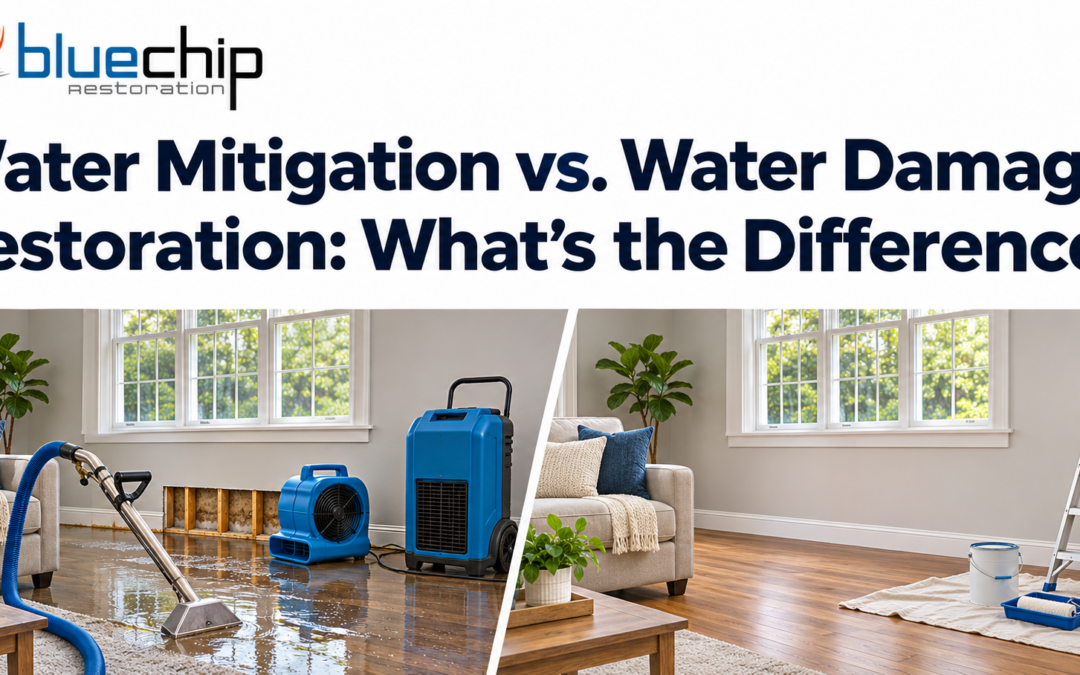
Water mitigation limits further damage after a leak or flood through water removal, cleanup, and drying. Water damage restoration brings affected areas back into use, including repairs and reconstruction when needed. Mitigation usually comes first, but “restoration” is also used to describe the entire recovery process.
That overlap can make estimates confusing. One company may use “restoration” to include extraction and drying, while another uses it mainly for rebuilding. Ask what the written scope includes, especially who will repair the areas opened or removed during cleanup.
Key Takeaways
- Water mitigation limits further damage through water removal, cleanup, drying, and moisture monitoring.
- Water damage restoration repairs affected areas, including damaged drywall, flooring, and other building materials.
- Mitigation usually comes first. Repairs should begin once affected materials are ready and necessary cleanup is complete.
- Not every water loss needs rebuilding. Some materials can be dried and saved; others need replacement.
- Fixing the leak may require a plumber or another specialist. Confirm who will address the source of the water.
- Blue Chip Restoration handles mitigation and repairs, helping Nashville property owners manage both stages through one company.
Water Mitigation vs Water Restoration at a Glance
| What you need to know | Water mitigation | Water restoration and repairs |
|---|---|---|
| Main purpose | Limit additional damage and address water and moisture | Restore affected materials and spaces to usable condition |
| Typical work | Extraction, necessary material removal, cleaning, drying, and moisture monitoring | Repairing or replacing drywall, flooring, trim, cabinets, and other damaged components |
| When it happens | Starts promptly after the loss is assessed and safe access is established | Repairs follow when the affected area is ready; planning can begin earlier |
| What you may see | Drying equipment, removed baseboards, or opened walls | New materials, repaired surfaces, and finished rooms |
| Completion question | Has the moisture problem been addressed and the required cleanup completed? | Has the agreed repair scope been completed? |
| Does every loss need it? | The response depends on the extent and conditions | Some losses need little or no reconstruction |
For this comparison, “restoration and repairs” means the work after mitigation. A contractor’s broader water damage restoration service may include both.
What Is Water Mitigation?
Water mitigation is the work done to reduce additional damage after unwanted water enters a property. It addresses standing water, moisture in materials, and conditions that could make the loss worse.
Water mitigation services may include:
- Inspecting affected areas and checking how far moisture has spread.
- Extracting standing water.
- Removing materials that cannot be restored or that prevent access for necessary drying.
- Cleaning affected surfaces as appropriate for the water conditions.
- Using air movers and dehumidifiers.
- Monitoring moisture and adjusting the drying approach.
Water extraction removes bulk water. Structural drying addresses moisture remaining in building materials. A floor can look dry while the material beneath it still needs attention.
The IICRC’s description of its S500 water damage restoration standard includes inspection, drying technology, documentation, and structural restoration within the broader professional process.
Does mitigation include fixing the leak?
Do not assume it does. Stopping water entry and permanently repairing a failed pipe, appliance, or roof may require a plumber or another specialist.
Confirm who is responsible for correcting the source. The IICRC’s S500 overview distinguishes that responsibility from the restorer’s work unless those services are separately arranged.
What Is Water Damage Restoration?
Water damage restoration is the process of recovering a property after water damage. In a mitigation-versus-restoration comparison, the term usually refers to repairing or replacing what remains damaged after cleanup and drying.
This may involve replacing removed insulation, repairing drywall, installing flooring, restoring trim, and painting. Larger losses may require structural repairs or reconstruction.
A room can be dry enough for repairs and still have exposed framing or missing flooring. That does not necessarily mean mitigation was unsuccessful. It means the rebuilding stage remains.
Blue Chip Restoration provides water damage restoration in Nashville and licensed general contracting services, allowing necessary repairs to follow the cleanup and drying work through the same company.
How Mitigation and Restoration Work Together
Consider a washing machine supply line that leaks into a laundry room and adjoining hallway. This is an illustrative example, not a Blue Chip project report.
The source needs to be corrected. A restoration team then assesses the affected materials, removes water, and determines what can be dried or needs removal.
If sections of baseboard and drywall must come out, those areas may remain open during drying. Once the affected materials are ready and required cleanup is complete, repairs can include replacing drywall, reinstalling trim, and repainting.
The homeowner has two different questions at those stages:
- During mitigation: Where did the water go, and what needs drying or removal?
- During repairs: What needs rebuilding, who is doing it, and what is included?
Ask about both stages early, even when the immediate priority is water removal.
How Do You Know When Repairs Can Begin?
Repairs should begin when the affected area is ready for the planned work. A surface that looks dry is not enough to establish that concealed materials have dried.
The EPA’s guidance on moisture assessment explains that moisture meters can help assess building materials and monitor drying progress.
Before walls are closed or flooring is installed, ask your contractor:
- Has the water source been corrected?
- Which affected materials were checked, and what readings support readiness?
- Are any concealed areas still under investigation?
- Has required cleaning or material removal been completed?
- Does the repair plan account for remaining moisture or mold concerns?
These questions help make the handoff clearer. They are not a substitute for professional assessment.
If you suspect a leak has spread beyond the visible damage, our guide to signs of hidden water damage explains what deserves further attention.
Do You Always Need Both Services?
Not every water loss requires extensive rebuilding. Materials that can be properly cleaned and dried may not need replacement. Other losses leave damaged finishes or removed materials that require repairs.
The EPA’s clean-water damage guidance distinguishes between materials that may be dried in place and those that require removal. The guidance is specific to clean-water situations; contaminated water requires a different assessment.
The extent of the work depends on what got wet, its condition, and whether it can be restored. Ask why each material is being kept or removed rather than assuming every wet surface needs replacement.
What if mold is found?
Mold concerns can add remediation work to the project. Drying and replacing finishes alone may not address affected materials.
Blue Chip’s mold remediation process uses independent inspection and testing, with clearance inspection before reconstruction. That is separate from ordinary moisture monitoring during a water loss.
How Long Do Mitigation and Restoration Take?
There is no single schedule for every property. Mitigation timing depends on the extent of moisture, affected materials, access, and drying conditions. Repairs also depend on the construction scope, materials, scheduling, and any required inspections.
The EPA recommends drying wet materials within 24–48 hours where possible to help prevent mold growth. That is a prompt-response goal, not a promise that every damaged building will be dry or fully repaired within two days.
Ask for separate expectations for drying and rebuilding. A useful update explains what has been completed, what remains, and what must happen before the next stage starts.
Water Mitigation vs. Restoration Costs: What Are You Paying For?
Mitigation and repairs involve different tasks, so compare their scopes separately.
| Estimate area | Questions to ask |
|---|---|
| Assessment and water removal | Which rooms and affected areas are included? |
| Drying equipment | How are equipment use, monitoring, and any additional days charged? |
| Material removal | What will be removed, why, and is disposal included? |
| Cleaning | Which surfaces or materials are covered? |
| Reconstruction | Does the price include replacing materials removed during mitigation? |
| Finishes | What flooring, trim, paint, or other selections are allowed for? |
| Additional work | How will newly discovered damage and changes be documented? |
One proposal may cover drying only, while another includes drywall and flooring repairs. Comparing only the totals can hide that difference.
For a closer look at the factors involved, read our guide to water damage restoration costs in Nashville.
Does Insurance Cover Mitigation and Restoration?
Coverage depends on the cause of the water damage, policy terms, exclusions, and the work involved. The words “mitigation” or “restoration” on an estimate do not establish coverage.
Contact your insurer promptly. Ask what documentation is needed for emergency work and permanent repairs, and retain photographs, estimates, and receipts.
The Tennessee Department of Commerce and Insurance explains that standard homeowners policies do not include flood coverage. Do not assume water from an overflowing river is treated the same as water from a failed household pipe.
Our guide to homeowners insurance and water damage in Nashville explores the common coverage questions. Your insurer must confirm how your policy applies to the loss.
Can One Company Handle Mitigation and Reconstruction?
Yes, when the company provides both restoration services and the required construction capabilities. Confirm this before assuming the team handling drying will also rebuild the room.
Ask who manages repairs, whether they require a separate agreement, and who will communicate changes to the scope. Also establish whether specialists are needed for the underlying plumbing, electrical, or roofing issue.
Blue Chip Restoration combines damage restoration with residential and commercial repairs and reconstruction. Our team can assess water damage, complete the necessary cleanup and drying, and carry out agreed repairs afterward.
Frequently Asked Questions
What is the difference between water mitigation and remediation?
Water mitigation focuses on limiting additional damage. “Remediation” generally refers to correcting a problem and may describe water cleanup or a specific task such as mold remediation. Companies use these terms differently, so ask which activities are included.
Does water mitigation include replacing drywall?
Mitigation may include removing drywall when necessary for cleanup or drying. Installing and finishing replacement drywall generally belongs to the repair scope. Check the estimate to see whether both removal and replacement are included.
Can I stay in the property during the work?
That depends on the affected areas, hazards, access, and work required. Ask the contractor which spaces can be used and whether essential facilities remain available. For an insurance claim, ask your insurer about any applicable additional living expense coverage.
Should I call a plumber or a restoration company?
A plumber may be needed to repair a failed plumbing component. A restoration company assesses and addresses the resulting water damage. Some incidents require both; confirm who will handle each part.
Water Damage Help in Nashville and Middle Tennessee
If your property has water damage, you do not need to decide which service label applies before calling. Tell us what happened, where the damage is, and whether water is still entering.
Blue Chip Restoration serves homeowners and businesses in Nashville, Donelson, Hermitage, Franklin, Mt. Juliet, and nearby communities. Our office is at 2543B Lebanon Pike, Nashville, TN 37214.
Call 615-832-5300 for 24/7 emergency help or contact Blue Chip Restoration to discuss an assessment.